
Standing Row
The standing row is a practical resistance-band exercise for strengthening your upper back, shoulders, and arms. It can help develop the muscles that support posture and teaches you to stay stable while pulling against horizontal resistance.
Equipment Needed
- Resistance band with handles, or a long resistance band you can grip securely
- A secure, suitable anchor set around waist to lower-rib height; follow the band's and anchor's safety instructions
Muscle Groups Targeted
- Rhomboids and middle trapezius (between the shoulder blades)
- Latissimus dorsi (lats)
- Rear deltoids
- Biceps and forearms
- Core muscles, which help keep your body steady
How to Do a Standing Row
- Secure the resistance band in front of you at about waist to lower-rib height. Check the attachment before applying tension.
- Stand facing the anchor point with your feet hip-width apart, holding the band securely in both hands.
- Step back until there is light tension in the band, with your arms extended in front of you.
- Keep your chest lifted, back in a comfortable neutral position, knees soft, and body steady.
- Pull your hands towards your ribs, driving your elbows back without shrugging your shoulders.
- Pause briefly, then extend your arms forward again slowly and with control.
- Repeat for your chosen number of reps, avoiding momentum.
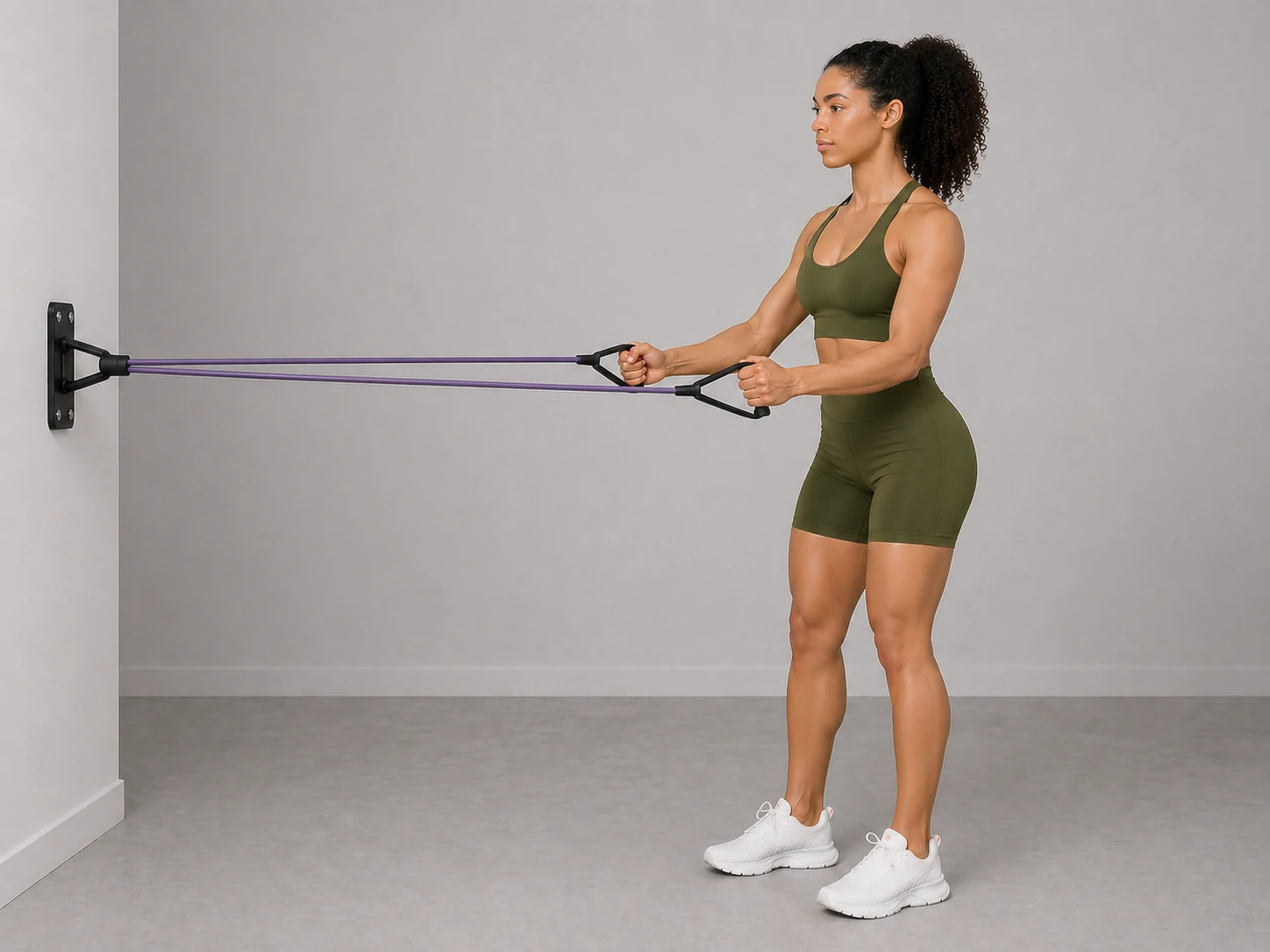
Start position
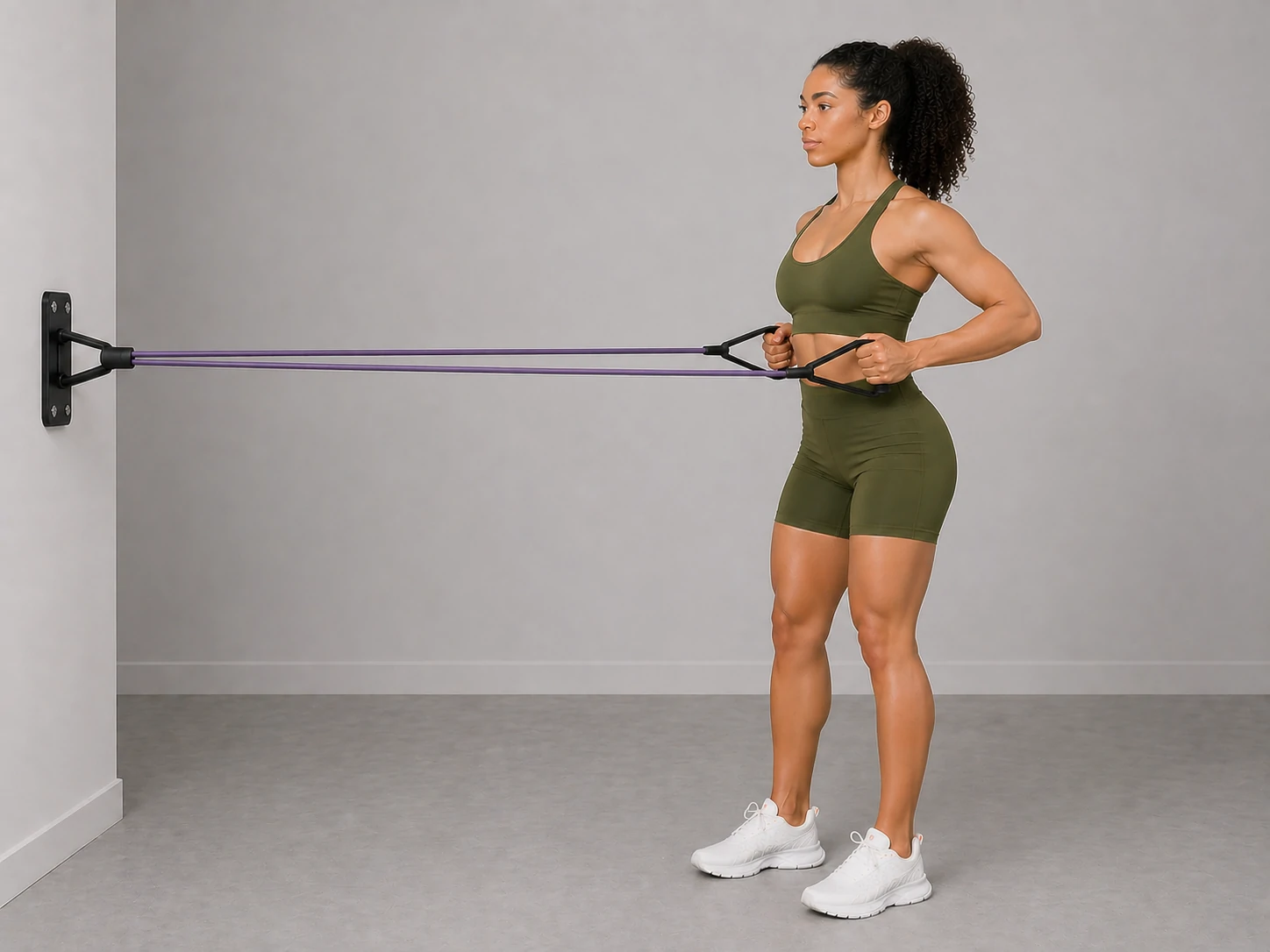
Pull the handles toward your ribs
Tips and Common Mistakes
- Use a secure anchor point, and inspect the band for damage before starting.
- Keep your wrists straight, neck relaxed, and shoulders away from your ears.
- Avoid rounding your back or rocking your body to pull the band.
- Think about drawing your shoulder blades gently together as your elbows move back.
- Choose band tension you can control across the movement; do not let the band snap back.
- If you experience pain in your shoulders, elbows, or back, stop and reassess. Read more about training around injury.
Variations and Related Exercises
- Single-arm standing band row: perform the movement with one arm at a time, keeping your torso steady.
- Seated Resistance Band Row: a floor-seated alternative with the resistance band anchored securely around the soles of both feet.
- Bent over row: a free-weight rowing option using a hip-hinge position.
The standing row is a simple band-based pulling movement that develops back strength and fits easily into a home strength routine.
When to Use This Exercise
The standing row works well in full-body and upper-body training sessions. It is a useful option at home with a resistance band, and it pairs naturally with movements like the single arm row.
Start with controlled reps and focus on feeling the work through your back rather than simply pulling harder on the band.
Part of the optimal health library
Add this exercise to your training plan
Create a free account to use this exercise in your training plan.
Create a free account to use this exercise