
Pull-Up
The pull-up is a major upper-body strength exercise. It trains you to lift your body using your back, arms, shoulders, and core, and it is one of the clearest measures of relative strength: how strong you are in relation to your own body weight.
Pull-ups can feel intimidating at first, but they are also highly scalable. Assisted pull-ups, band-assisted pull-ups, negative pull-ups, dead hangs, and scapular pull-ups can all help you build towards a full pull-up safely.
Equipment Needed
- A secure pull-up bar.
- Optional: resistance band, assisted pull-up machine, or box/bench for scaling.
Muscle Groups Targeted
- Back, especially the latissimus dorsi
- Biceps and forearms
- Shoulders
- Upper back and shoulder blade stabilisers
- Core
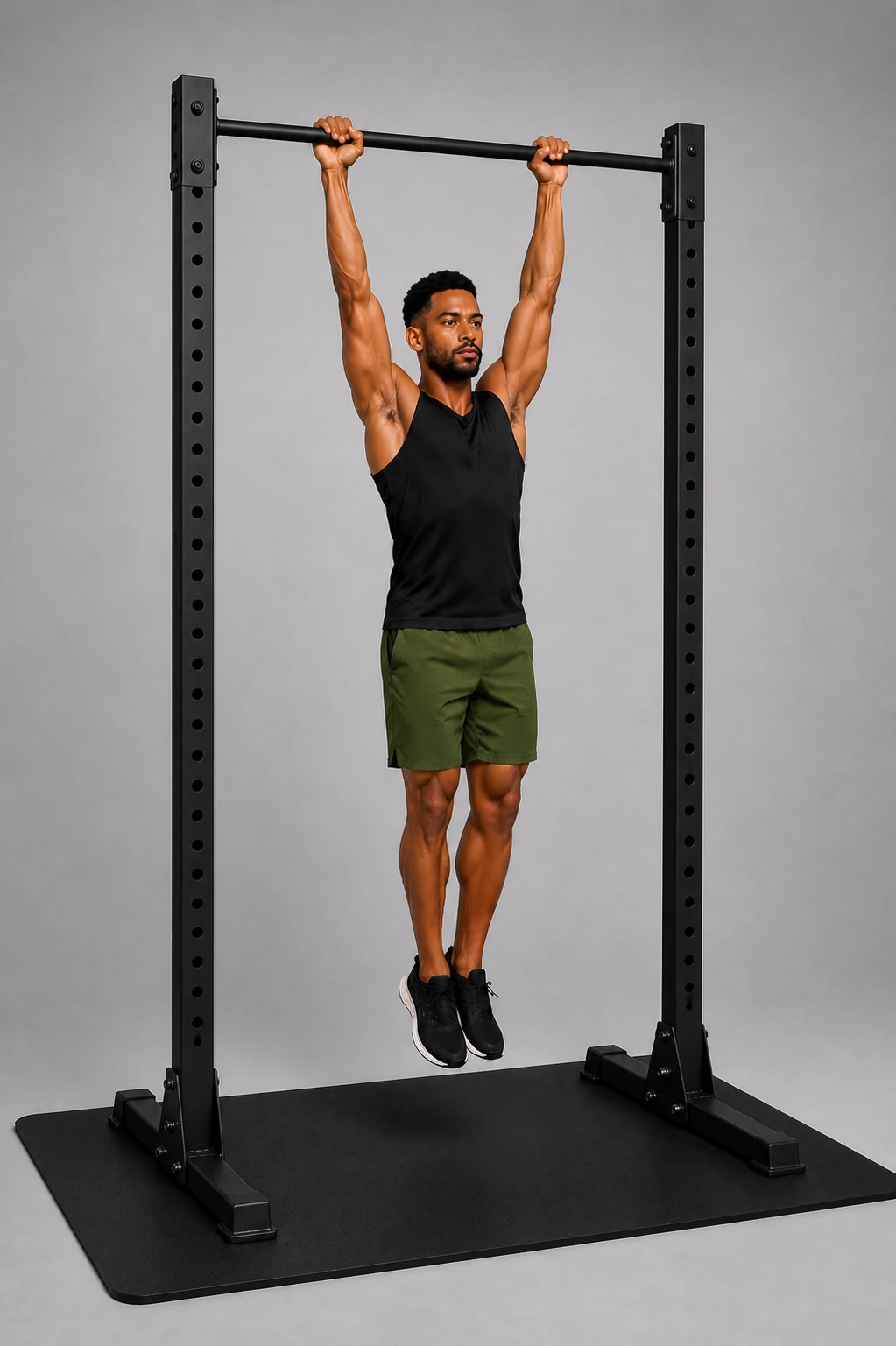
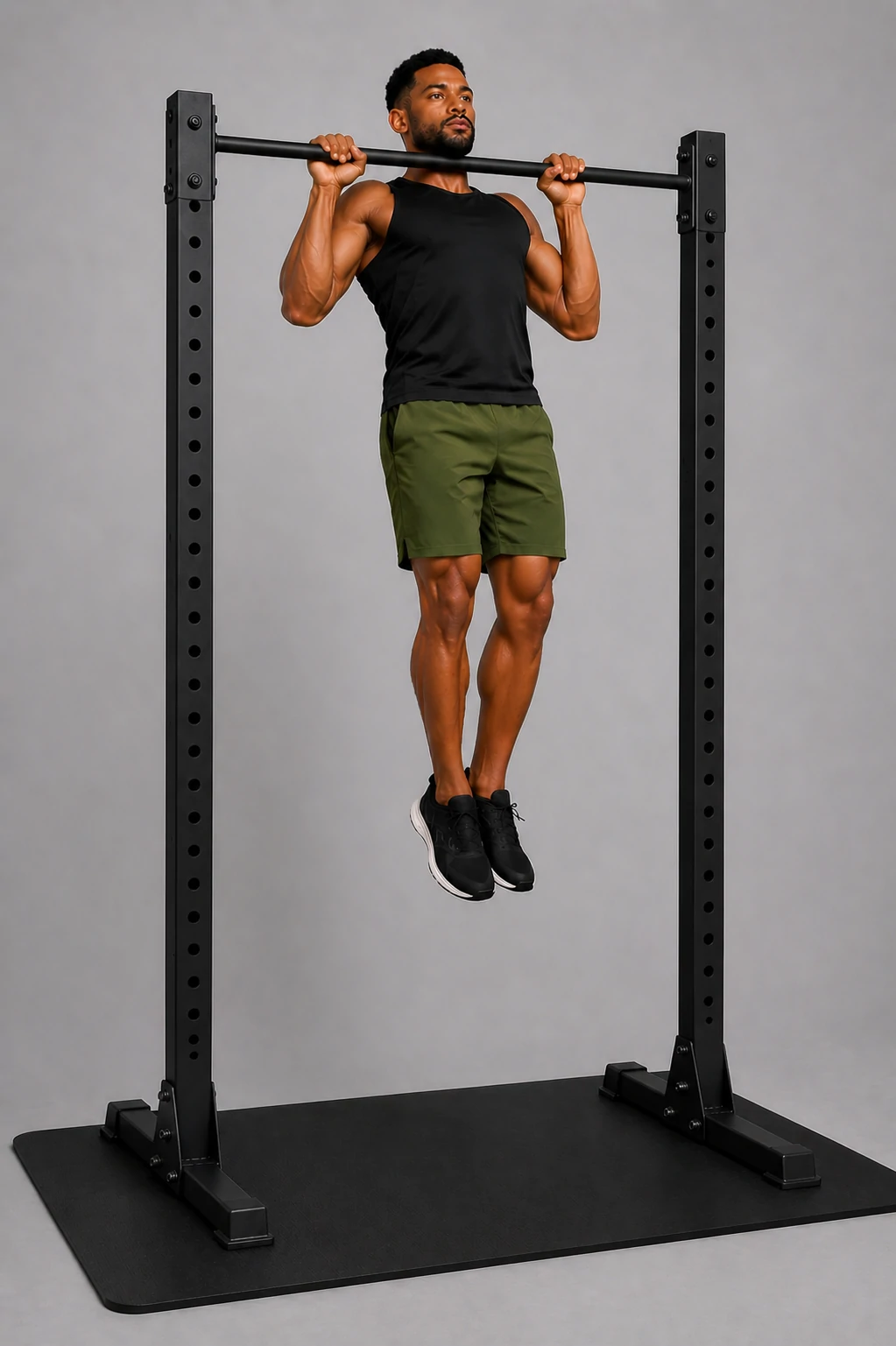
How to Do a Pull-Up
- Grip the bar with your hands slightly wider than shoulder-width apart, palms facing away from you.
- Start from a controlled hang with your body steady and your shoulders active, not shrugged loosely around your ears.
- Brace your core and keep your legs quiet rather than swinging.
- Pull your shoulder blades down and back, then drive your elbows down towards your sides.
- Continue pulling until your chin is near or above the bar.
- Lower yourself with control until your arms are straight again.
- Reset your body position before starting the next rep.
Beginner Scaling Options
- Dead hangs: Hang from the bar to build grip strength, shoulder comfort, and confidence.
- Scapular pull-ups: Keep your arms straight and practise pulling your shoulder blades down and back. This teaches the first part of the movement.
- Band-assisted pull-ups: Loop a resistance band around the bar and place a foot or knee in it to reduce the load.
- Assisted pull-up machine: Use machine assistance to practise the same movement pattern with less body weight.
- Negative pull-ups: Step or jump to the top position, then lower yourself slowly and under control.
Common Mistakes
- Swinging or kicking to get over the bar.
- Starting from loose, shrugged shoulders instead of an active hang.
- Only doing partial reps without control.
- Craning the neck to reach the bar instead of pulling the body upward.
- Dropping quickly from the top instead of lowering with control.
- Ignoring elbow, shoulder, or wrist discomfort rather than adjusting early and training around it.
Tips for Success
- Think about pulling your elbows down, not just pulling your chin up.
- Keep your ribs down and your core braced so your body stays controlled.
- Use assistance before your form breaks down. Good assisted reps are more useful than messy full reps.
- Build gradually with hangs, scapular control, negatives, and assisted variations.
- If your shoulders, elbows, or wrists start to feel off, reduce the load or switch to a regression and focus on training around injury.
A pull-up is not just an arm exercise. Done well, it is a coordinated pull from your back, shoulders, arms, and core.
When to Use This Exercise
Pull-ups fit well into upper-body strength sessions, full-body plans, and bodyweight training. They pair naturally with pressing exercises like push-ups, and they can also sit alongside rows, dead hangs, or core work.
If you cannot do a full pull-up yet, use the assisted versions as your main exercise. The goal is not to rush the movement, but to build strong, controlled pulling strength over time.
Part of the optimal health library
Add this exercise to your training plan
Create a free account to use this exercise in your training plan.
Create a free account to use this exercise